ARIÑO DUGLASS, HQ
Pol. ind. Royales Bajos, s/n. 50171 La Puebla de Alfindén Zaragoza, Spain
Tel, +34 976 108 008
DELEGATIONS
Paris
London
U.S.A
Mexico


Dimensions
|
Maximum dimensions |
|---|
|
6000 x 3210 mm |
*Measurements according to type of project. Contact our technical advisers and consultants: tecnico@duglass.com
Duglass tempered glass is a safety product that offers high mechanical strength and excellent resistance to thermal stresses. Duglass tempering is achieved by subjecting the glass to a controlled thermal treatment consisting of heating the glass to a temperature close to its softening point and subsequently rapidly cooling it by directing air onto its surface. Thanks to this thermal process, the glass is given the surface stress required to enhance its mechanical properties.
For tempered glass, the risk of spontaneous breakage due to nickel sulphide (NiS) inclusions is not covered by Ariño Duglass.
At Ariño Duglass, at the customer’s request, the Heat Soak Test treatment can be carried out in accordance with standard EN 14179 “Glass in building. Thermally toughened soda lime silicate safety glass and Heat Soak Tested”.
Duglass tempered glass is a safety glass, as in the event of breakage it fragments into small particles with minimal cutting capacity. Therefore, it is recommended for applications where there is a risk of breakage, such as automotive, sports equipment, urban and domestic furniture, partitions, and more.
Properties
The main characteristics of Duglass tempered glass are:
A consequence of the tempering process is that once glass is tempered, it can no longer be cut or machined. Therefore, all modifications to the glass (notches, cutting, drilling, polishing, etc.) must be carried out before the thermal process. However, tempered glass can undergo other types of transformations, such as laminating, solar control and low-emissivity treatments, and assembly in double glazing.
Mechanical Strength Value
The mechanical strength of Duglass tempered glass is 120 N/mm², considering short-duration quasi-static loads and a 5% probability of breakage. For calculation purposes, the maximum working stress for Duglass tempered glass is considered to be 50 N/mm².
Fracture Properties
Duglass glass fragments into numerous small pieces, whose shape and size depend on the thermal process. The UNE-EN 12150 standard, “Glass for building. Thermally toughened soda-lime silicate safety glass,” defines the minimum fragmentation criteria for construction products, while specific specifications or standards define tempered glass fragmentation for use in railways, rolling stock, or furniture. Duglass tempered glass exceeds the requirements of UNE-EN 12600 regarding pendulum impact with soft body testing, achieving protection level 1C1 with 4 mm thick tempered glass (please consult our technical department).
Optical Distortions
Due to the tempering process, the glass surface may experience slight deformations affecting flatness, causing minor optical distortions in the final product. These distortions are more noticeable in reflected images and depend largely on the reflected objects and viewing geometry (more evident with straight-edged geometric shapes). Glass dimensions also play an important role in these deformations.
Additionally, tempered and heat-strengthened glasses, under certain viewing conditions, may display faint shadows, sometimes iridescent, caused by internal stresses created during tempering. These marks are more visible during times of day with highly polarized light (sunrise, sunset, or reflected by clouds) and occur in all properly tempered glasses.
Applications
Safety Performance
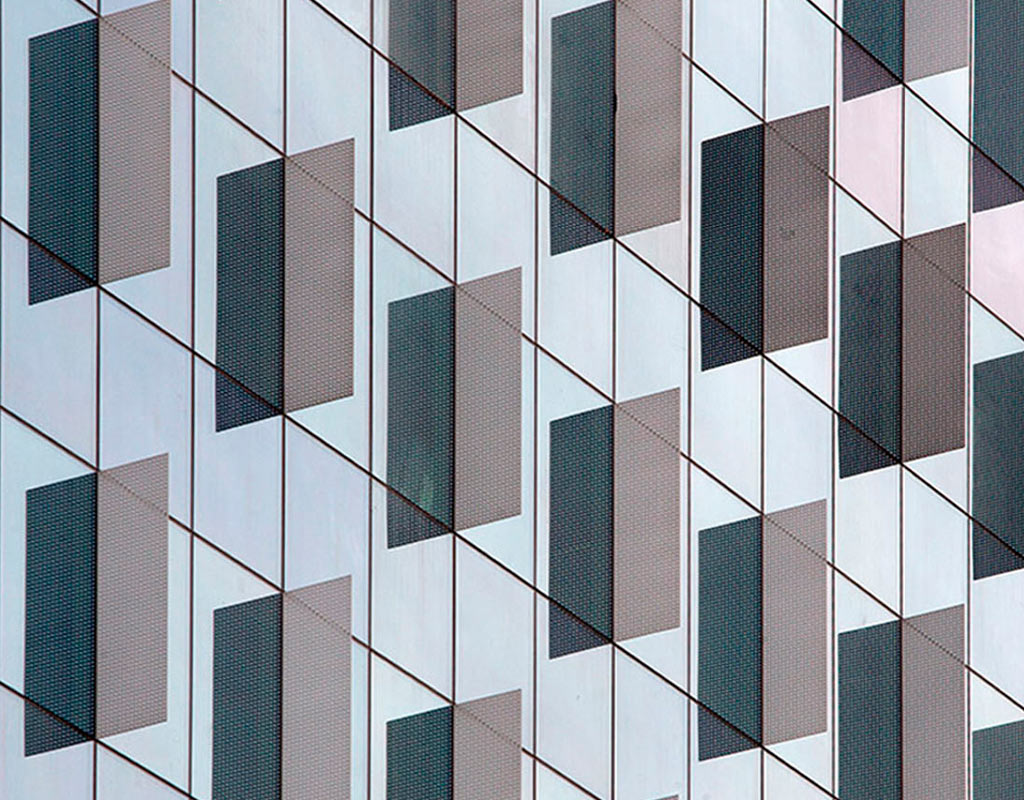
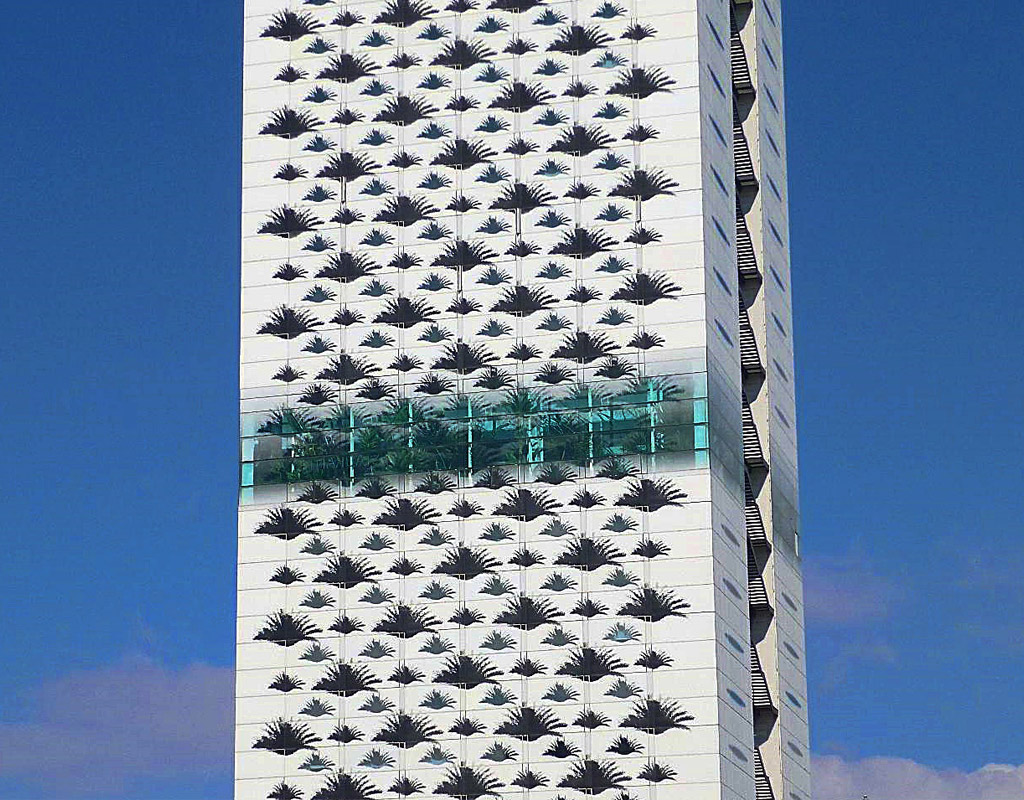
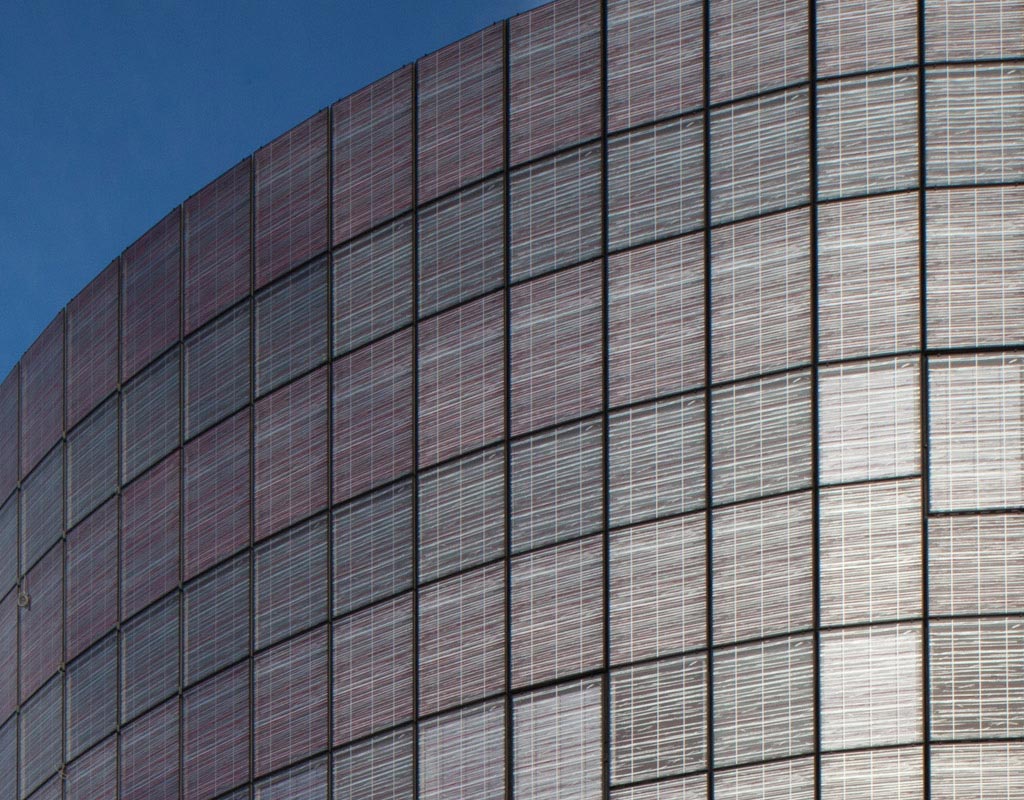
The safety properties make the use of Duglass tempered glass essential for certain exterior and interior applications. In non-residential building facades, Duglass glass is often used in vision areas incorporated into Ambience double glazing or in opaque areas to conceal floor slab passages.
Other exterior applications include canopies, cabins, advertising panels, and paddle courts. Interior applications are diverse: furniture, doors, room dividers, wardrobe fronts, bathroom partitions, refrigerator trays, and more.